EV Charging Premium Tiers: Segment by Experience, Not by Channel
EV charging premium tiers are a real opportunity for Charge Point Operators, but only when built around experience, facilities, security, and comfort rather than restricting access by app or channel.
The conclusion first: EV charging premium tiers represent a real and underexploited opportunity for Charge Point Operators, but only if they are understood correctly. A premium tier in charging is not about restricting who can access a charger based on which app they arrived through. It is about differentiating the quality of the experience, the facilities, the security, the comfort, the reliability, and the fair pricing, so that drivers who value a better stop can choose one. This distinction matters because charging is fundamentally different from refuelling. A petrol stop is over in five minutes, so the environment is almost irrelevant. A charging stop lasts twenty to forty minutes, which makes the environment decisive. EV charging premium tiers are how a CPO turns that dwell time into a competitive advantage. The winning operators will segment by experience, not by channel, and they will do it as the second stage of a funnel that starts by capturing as much traffic as possible.
The Rolls Royce thought experiment
Start with a scene, because it makes the whole argument vivid.
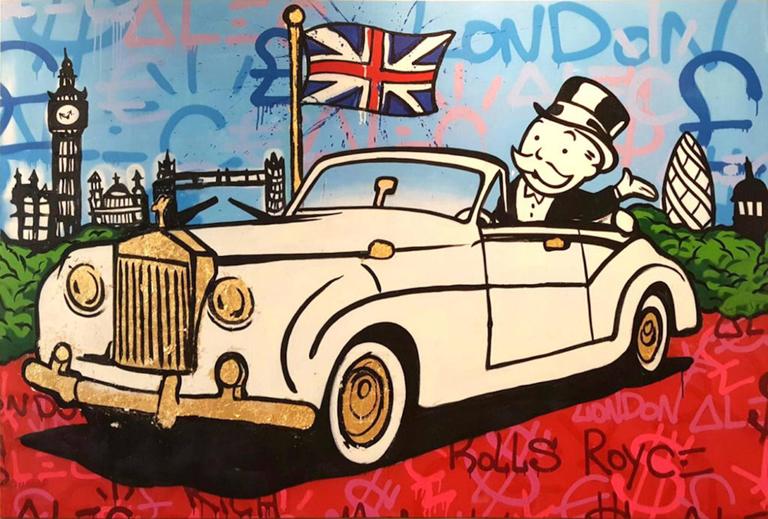
Imagine a Rolls Royce pulling into a petrol station. The driver, perhaps with their family in the car, steps out, fills up in five minutes, pays, and leaves. Nobody bothers them. There is no time for anyone to. The transaction is so fast that the quality of the petrol station, its cleanliness, its safety, its comfort, barely registers. A premium driver and a budget driver have essentially the same five-minute experience, because five minutes is too short for the environment to matter. The petrol station does not need EV charging premium tiers thinking, because refuelling is too quick for experience to be a differentiator.
Now imagine the same Rolls Royce, now electric, pulling into a charging station. The driver is not there for five minutes. They are there for twenty, thirty, perhaps forty. They and their family are going to spend that time somewhere. And now every question the petrol station could ignore becomes acute. Is the station clean? Is it safe, especially after dark, especially with a family in the car? Is there somewhere pleasant to wait, a toilet, a refreshment, shelter from the weather? Is the driver going to be approached, hassled, or made to feel exposed while they sit for half an hour in a poorly lit forecourt?
Suddenly the environment is everything. The premium driver who was indifferent to the petrol station cannot be indifferent to the charging station, because they have to inhabit it for half an hour. And here is the question every CPO should sit with: which charging stations today actually offer the facilities and the security to cater to that Rolls Royce driver and their family? Very few. That gap is precisely where EV charging premium tiers become a genuine commercial opportunity, and it is a question worth every operator's serious thought.
Why charging makes experience a differentiator
The Rolls Royce is a vivid case, but the underlying point generalises to every driver and is the foundation of EV charging premium tiers: because charging takes time, the experience of the stop becomes a product in its own right.
Refuelling is a transaction. Charging is a stay. That single difference changes what a charging location is competing on. A petrol station competes almost entirely on location and price, because nothing else has time to matter. A charging station competes on location and price too, but also on everything that fills the twenty to forty minutes a driver spends there: the cleanliness, the safety, the comfort, the amenities, the reliability, and the dignity of the wait. For the first time in the history of refuelling, the environment where energy is dispensed is something a driver experiences at length and will choose between.
This is why EV charging premium tiers are possible in charging in a way they never were in petrol. There is room to offer a genuinely better experience, and there are drivers who will value and choose it. Not only luxury-car drivers, though they are the sharpest illustration, but families who want to feel safe, professionals who want to work during a charge, anyone for whom a clean, secure, comfortable half-hour is worth choosing over a bleak one. The dwell time creates the space for tiers of experience, and the operators who recognise this early will define the premium end of the market.
Segment by experience, not by channel
Here is the crucial principle, and it is where many operators get EV charging premium tiers wrong. The segmentation that matters is by experience, not by channel.
An operator should never gate access to a charger based on which app or partner the driver arrived through. Turning away a driver, or giving them a worse experience, because they came via a roaming partner or an automaker's app rather than the operator's own app, is a self-defeating strategy that sacrifices utilisation to protect a channel preference. The channel a driver arrives through is irrelevant to the value of their session. What a CPO should segment on instead is the tier of experience it offers: a standard experience available to everyone, and a premium experience, in location or in facilities or in service level, that drivers who value it can choose.
The proof that this is the right model comes from the premium brands already building it. Mercedes-Benz has built a network of premium charging hubs with comfortable lounges, refreshments, restrooms, covered canopies, and enhanced lighting and security, and it opens those hubs to drivers of all EV brands, not only Mercedes drivers. Porsche has built luxury charging lounges with air conditioning, toilets, and high-power charging. These are the most premium-conscious carmakers in the world, and their model for EV charging premium tiers is to differentiate on experience while keeping access open. They compete on how good the stop is, not on locking out drivers who came from elsewhere.
That is the template. A CPO builds tiers of experience and lets drivers self-select into them by preference, while accepting demand from every channel that will route drivers its way. The premium tier attracts and retains the drivers who value it. The open access keeps every charger as full as possible. EV charging premium tiers and broad channel access are not in tension. They are complementary, exactly as the last piece in this series argued about loyalty and distribution, covered in EV Charging Loyalty Cashback.
What premium tiers actually look like
For a CPO thinking about EV charging premium tiers, it is worth being concrete about what the premium experience can consist of. The levers are not exotic, and most are within reach of any operator willing to invest in the quality of the stop.
Security. Well-lit, monitored, safe sites where a driver and their family feel comfortable during a long dwell, day or night. This is perhaps the most underrated premium lever, and the one the Rolls Royce scenario exposes most sharply.
Clean, comfortable facilities. Toilets, shelter, seating, refreshment, a pleasant place to spend half an hour rather than a bleak forecourt. The amenity trend, from premium OEM lounges to third-party hospitality units, is built on exactly this.
Guaranteed availability. Reserved or priority bays that spare premium-tier drivers the anxiety of arriving to find every charger occupied. Certainty of access is a genuine premium good.
Speed. The highest-power charging, so the premium driver spends less time waiting, and what time they do spend is comfortable.
Service. Concierge touches, assistance, a frictionless start-to-finish experience that feels considered rather than industrial.
Fair, transparent pricing. Premium does not mean gouging. It means charging a fair price for a genuinely better experience, communicated transparently, so the driver feels they received value rather than a markup. A premium tier justified by real quality is durable. One that is just a higher price for the same experience is not. The broader logic of transparent pricing is set out in EV Charging Tariff Strategy and EV Charging Dynamic Pricing Strategy.
Not every operator will build every lever, and not every site should be premium. The point of EV charging premium tiers is choice: an operator decides which sites and which service levels warrant a premium experience, builds it genuinely, and lets drivers who value it choose it, while maintaining a solid standard experience everywhere else.
Premium tiers are the second half of the funnel
This is where EV charging premium tiers connect to the strategic sequence that matters most for a CPO, and it is the same funnel logic as the previous piece in this series.
The first objective for any operator is always traffic and visibility. Get as many drivers to your chargers as possible, from every channel that will route them, because utilisation is what makes charging economics work and an empty premium lounge rewards nobody. This first stage is about maximising demand and being discoverable everywhere drivers look, without regard to channel. The mechanics of capturing that demand are in EV Charging Demand Platform, and why utilisation dominates everything is in EV Charger Utilisation Rate.
EV charging premium tiers are the second half of the funnel: converting that broad traffic into higher-value, directly-loyal relationships. Once drivers are arriving, the premium experience is how an operator attracts and retains the ones worth the most, the drivers who will choose a better stop, return to it, and become directly loyal because the experience earned it. The premium tier is a conversion and retention layer that sits on top of broad demand capture, not a replacement for it. An operator that builds premium tiers but neglects traffic has a beautiful lounge nobody visits. An operator that captures traffic but offers no experience differentiation fills its chargers but never builds the premium, loyal relationships that are worth the most. The winning strategy does both, in order: capture broadly first, then convert with experience.
This is why EV charging premium tiers are not in conflict with taking demand from every channel. The broad demand fills the chargers and feeds the funnel. The premium experience converts the best of that demand into durable, high-value loyalty. First the traffic, then the tier.
Where NetworkCore fits
NetworkCore serves the first half of that funnel, which is what makes the second half possible. It connects a Charging Partner to a growing network of Distribution Partners, including the automakers whose drivers are exactly the premium segment a CPO wants to attract, and routes that demand to the operator's chargers at the operator's own transparent public price, settled fast. The operator captures the traffic and the visibility, from every channel, without gating access by where the driver came from.
What NetworkCore does not do is interfere with the operator's experience tiers or its direct relationships. The operator keeps full control of its EV charging premium tiers, its facilities, its pricing, its service levels, and its direct app and loyalty programme. NetworkCore brings the drivers to the door at the operator's public price; what experience they find when they arrive, and how the operator converts them into premium, loyal customers, remains entirely the operator's own. The traffic comes from everywhere. The premium experience, and the loyalty it earns, belongs to the operator. The relationship between loyalty and distribution is explored further in EV Charging Loyalty Cashback and Customer Retention and EV Drivers.
The position for CPOs
If you operate charging infrastructure, EV charging premium tiers are a genuine opportunity that the physics of charging has handed you. Because a charging stop lasts twenty to forty minutes rather than five, the experience of that stop is something drivers notice, value, and will choose between, in a way that was never true of refuelling. The Rolls Royce driver who was indifferent to the petrol station cannot be indifferent to where they and their family spend half an hour, and neither can a great many ordinary drivers.
Build tiers of experience, not barriers of channel. Segment drivers by the quality of the stop you offer them, through security, clean facilities, guaranteed availability, speed, service, and fair transparent pricing, while accepting demand from every channel that will bring drivers to your door. Capture the traffic broadly first. Then convert the drivers worth converting with a premium experience they choose and return to.
Ask yourself the Rolls Royce question honestly: does your station offer what that driver and their family would choose for a half-hour stop? If the answer is not yet, that is the opportunity. Reach the team at networkcore.org to discuss how broad demand capture feeds the EV charging premium tiers that win your most valuable drivers.