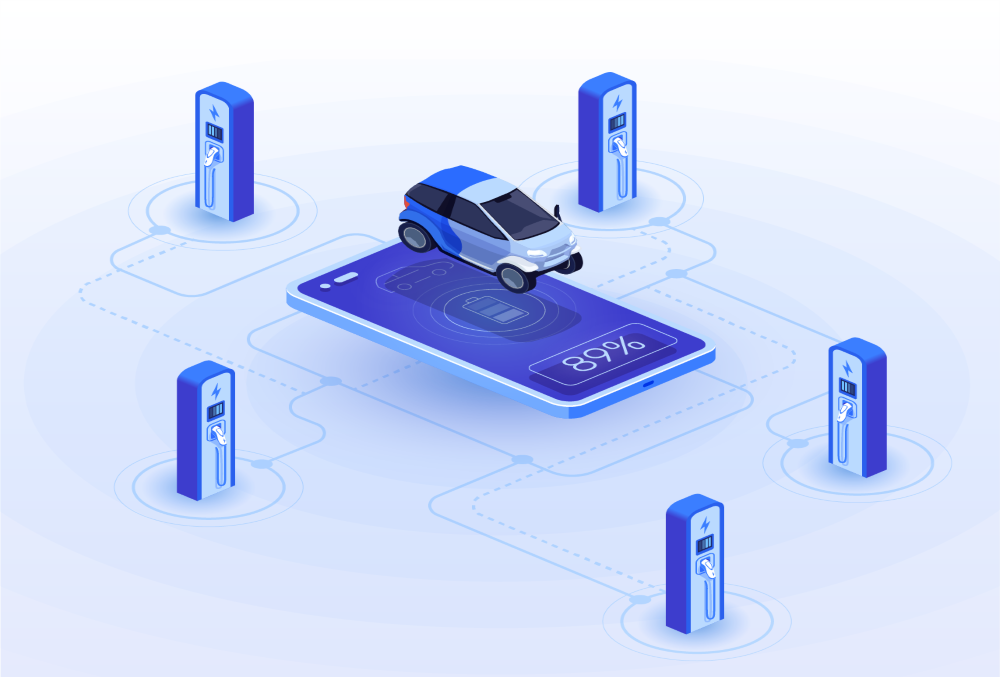
Customer Retention EV Drivers: Why Charging Is the Stickiest Feature You Can Add
Customer retention EV drivers deliver is unusually strong because charging is high-frequency, recurring, and non-negotiable. Here is why charging is the stickiest feature a Distribution Partner can add.
The conclusion first: customer retention EV drivers deliver is unusually strong, because charging is a high-frequency, recurring, non-negotiable behaviour. An EV driver charges several times a week, every week, for as long as they own the vehicle. Any Distribution Partner whose product becomes the place those drivers charge gains a recurring reason to be opened and a real structural defence against churn. This is the retention logic most platforms miss: charging is not a one-off feature, it is a weekly habit you can own. Most platforms treat retention features as incentives layered on top of a product; charging is a behaviour layered into the driver's routine. Adding it deepens engagement, moves the platform closer to super-app status, and costs nothing to offer at public price. This post explains why charging is the stickiest feature a Distribution Partner can add, how it drives customer retention EV drivers reward with loyalty, and why the same dynamic makes a healthy distribution mix valuable for CPOs too.
Why charging is a retention machine
Most features a platform adds to improve retention share a weakness: they are used occasionally. A better checkout flow, a new content category, a loyalty tier — these matter, but they are not woven into the user's routine in a way that guarantees frequent return. Charging is different, and the difference is what makes customer retention EV drivers deliver so powerful.
Charging is high-frequency. An EV driver charges multiple times a week, far more often than they interact with most apps on their phone. Charging is recurring, indefinitely — it does not tail off after onboarding the way many features do; the driver charges this week, next week, and every week for years. And charging is non-negotiable — the driver has to charge to keep driving, which means the behaviour is not optional or discretionary the way most app engagement is.
Put those three properties together and charging becomes a retention machine. A platform that owns the charging moment owns a weekly, recurring, mandatory reason for the driver to open it. Every charge is a re-engagement. Every week is multiple returns. The customer retention EV drivers provide is not a marketing campaign the platform has to keep funding — it is a behavioural habit the platform has embedded into the driver's routine, working continuously and for free once the integration is live. The strategic frame for how charging embeds into a platform's product is set out in Embedded Mobility Services. Few features a Distribution Partner can add are as structurally sticky as the one the driver must use to keep their car moving.
Charging reduces churn for any Distribution Partner
The retention benefit applies to almost any Distribution Partner, regardless of what its core product is, which is what makes customer retention EV drivers such a broadly valuable lever.
Consider what churn actually is: a user gradually opening a product less, until they stop and drift to an alternative. The defence against churn is frequency and value — giving the user reasons to keep returning and keep finding the product useful. Charging supplies both, for any platform whose users drive. A banking app that lets users charge becomes something they open when they charge, not just when they check a balance. A retail app that lets users charge becomes part of their driving week, not just their shopping. An insurance app, a parking app, a travel app, a fleet app — each one that adds charging gives its users a new, frequent, habitual reason to return, and every reason to return is a defence against the slow drift toward churn.
This is why customer retention EV drivers provide is additive to whatever the platform already does. The platform does not have to change its core product or compete for a new kind of user. It simply adds a feature that its existing EV-driving users will use several times a week, deepening their engagement with a product they already have. The charging does not replace the platform's core value; it reinforces it by increasing the frequency of contact and the breadth of usefulness. More frequent, more useful, more embedded in the user's routine — the three things that most reliably reduce churn, delivered by a single feature. The Distribution Partner model is how NetworkCore makes this available through one integration.
The super-app dynamic
There is a bigger strategic prize behind the retention benefit, and it is worth naming directly because it is where customer retention EV drivers connect to platform ambition: charging is a natural step toward becoming a super app.
A super app is a product that becomes a daily-life hub — a single place a user goes for many of their routine needs, rather than switching between many single-purpose apps. Super apps win because frequency compounds: every additional high-frequency use case makes the app more central to the user's life and harder to leave. Charging is an ideal super-app building block precisely because of the properties that make it a retention machine — it is high-frequency, recurring, and tied to a mode of daily life, mobility, that is central to how people live.
A platform that adds charging takes a meaningful step along the super-app path. It moves from being a single-purpose product to being a product that also handles one of the user's most frequent mobility needs. For platforms with explicit super-app ambitions, charging is one of the highest-frequency use cases available to add, and the customer retention EV drivers provide is the mechanism by which that added use case deepens the platform's centrality. Each additional routine need the app absorbs raises retention further, and charging is among the stickiest routine needs there is. The full treatment of how charging fits a super-app strategy is set out in Super-App Expansion Strategy.
Even for platforms without formal super-app ambitions, the dynamic holds in miniature. Adding charging makes the app more of a hub and less of a single-purpose tool, and that shift toward centrality is exactly what protects against churn. Customer retention EV drivers and super-app centrality are two descriptions of the same underlying force: frequency of useful contact.
Retention without a budget line
What makes charging unusual among retention features is that it improves customer retention EV drivers provide at no cost to the platform. Most retention investments are costs, loyalty rewards, discounts, content, features that the platform funds in the hope of reducing churn. Charging is the opposite: on public price, access is free and the driver pays the operator's exact tariff.
On public price, every session a driver completes through the platform is free for the platform to serve. Where the platform wants income from charging, it buys at wholesale and sets its own driver price. The retention benefit holds either way; it is the same sessions viewed two ways. The more the driver charges through the platform, the stickier the platform becomes.
And it is passive. Once the integration is live, the engagement accrues on activity that was always going to happen, with no ongoing operational effort from the platform. The driver was going to charge regardless; the platform simply becomes the place they do it, capturing the retention and the data for being that place. This is the rare combination that makes charging so attractive: a feature that defends against churn without a budget line behind it. The mechanics of how a platform earns from charging without operating any infrastructure are covered in EV Charging Bundled Services.
The CPO view: retention is why a distribution mix works
The retention dynamic is not only a Distribution Partner benefit. It is also the reason the CPO side of the network functions, and understanding this closes the loop on why customer retention EV drivers provide matters for the whole ecosystem.
A Charge Point Operator needs demand — drivers arriving at its chargers. That demand comes from the platforms drivers actually use, which are the Distribution Partners. When those Distribution Partners have strong retention among their EV-driving users, they retain an engaged, recurring base of drivers who charge frequently through the platform, and that base becomes a durable, reliable source of demand routed to the operator's chargers. The stickier the Distribution Partner, the more consistent the demand it sends. Customer retention EV drivers provide on the Distribution Partner side translates directly into dependable utilisation on the CPO side.
This is why a healthy distribution mix matters for operators. An operator connected to many Distribution Partners, each retaining its own engaged base of EV drivers, draws demand from many durable sources rather than depending on walk-up traffic or a single channel. The retention that makes Distribution Partners sticky is what makes the demand they route dependable, and a broad mix of such partners is what gives an operator resilient, diversified utilisation. The operator benefits from the Distribution Partners' retention without having to build any consumer relationship itself. The full picture of how demand reaches operators through the network is set out in EV Charging Demand Platform.
So the retention logic runs through the whole network. Distribution Partners add charging to reduce churn at no cost; their retained, engaged drivers become dependable demand; that demand fills operators' chargers; the operators settle fast at their public price and keep the network healthy. Customer retention EV drivers provide is the force at the demand end that makes the supply end work, which is why it is one of the most important dynamics in the entire model. The recent picture of how this network is scaling across emerging markets is covered in EV Charging in Emerging Markets 2027.
The position to take
If you operate a platform with EV-driving users, customer retention EV drivers provide is one of the strongest and most overlooked reasons to add charging. Charging is high-frequency, recurring, and non-negotiable — the three properties that make a feature genuinely sticky. Adding it gives your users a weekly, habitual reason to return, defends against churn, moves you closer to super-app centrality, and costs you nothing on public price, all at the same time.
You do not need to operate chargers or build charging infrastructure. You need your existing users and a single integration with the platform that handles everything beneath the charging experience.
NetworkCore is that platform. Add charging as a native feature, retain your EV-driving users through the one habit they cannot skip, and pay nothing for the access while you do it. Reach the team at networkcore.org to discuss what customer retention EV drivers provide could look like inside your product.