EV Charging Dynamic Pricing Strategy: How CPOs Move Beyond Static Tariffs Into a Real Marketplace
An EV charging dynamic pricing strategy only works when the CPO's price reaches the market intact — which requires a distribution channel, not a roaming toll booth.
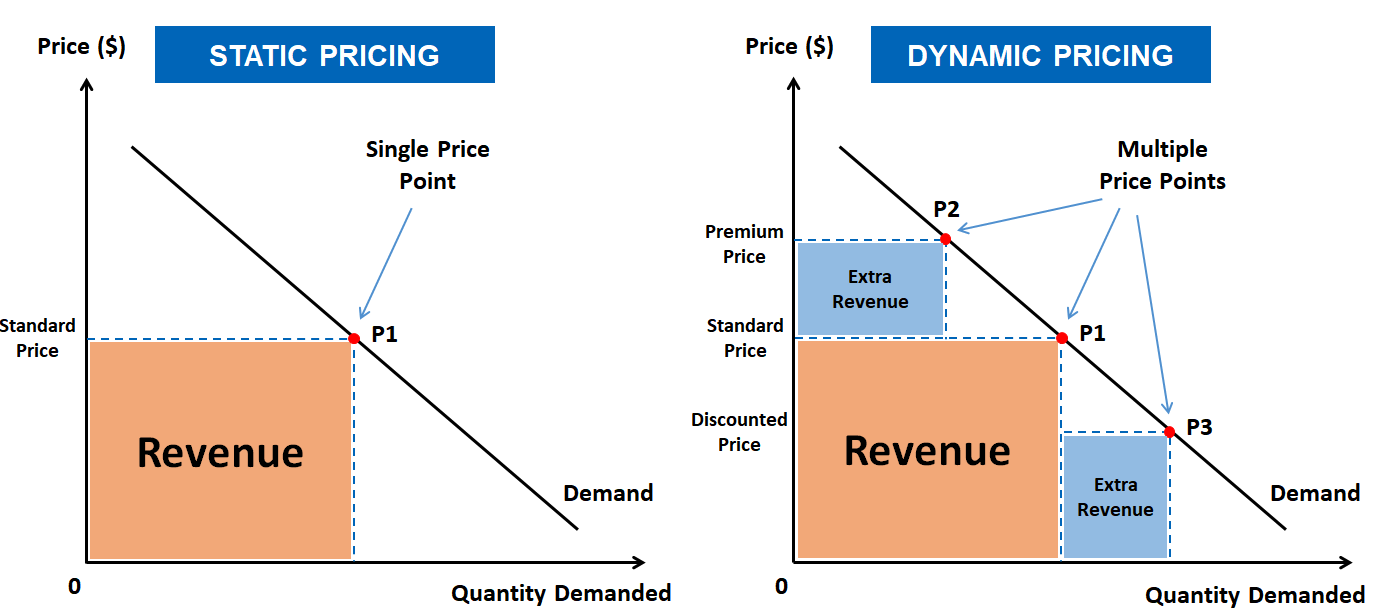
The conclusion first: an EV charging dynamic pricing strategy lets a Charge Point Operator price the way every other competitive market prices — responsively, by location, by time of day, by demand and energy cost — rather than being locked into the static, opaque tariffs that the traditional roaming model imposes. The obstacle has never been the CPO's willingness to price dynamically. It has been that the dominant commercial layer beneath public charging — wholesale-priced roaming with membership fee structures and intermediary mark-ups — structurally fights against dynamic public pricing. NetworkCore is built the opposite way. Your public dynamic price is the price. No subscription fees. A commission only when we bring you a session you would not otherwise have had. This post explains how an EV charging dynamic pricing strategy actually works when the platform beneath it is a genuine marketplace rather than a roaming toll booth.
Why static tariffs are a structural problem, not a CPO choice
Most CPOs do not run static tariffs because they want to. They run them because the commercial infrastructure beneath public charging has made dynamic pricing difficult, risky, or invisible to the end driver. Understanding why is the necessary starting point for any serious EV charging dynamic pricing strategy.
In the traditional roaming model, a CPO sells its sessions at a wholesale price negotiated bilaterally with each eMSP or roaming partner. The eMSP then marks that wholesale price up and presents its own retail price to the driver. The price the driver sees and pays is set by the eMSP, not the CPO. This decoupling has a fatal consequence for dynamic pricing: even if the CPO adjusts its underlying price in response to energy costs or demand, the driver never sees that adjustment cleanly, because an intermediary price sits on top of it. The CPO's pricing signal is absorbed and obscured by the roaming layer before it ever reaches the market.
This is the structural reason static tariffs persist. When your price is going to be marked up, obscured, and decoupled from what the driver pays anyway, the incentive and the ability to run a sophisticated EV charging dynamic pricing strategy both collapse. Why invest in dynamic pricing when the market never sees your actual price? The roaming layer flattens the CPO's pricing into a wholesale input that disappears into someone else's retail decision.
Add to this the membership and subscription fees that roaming hubs charge regardless of whether they deliver sessions, and the slow settlement cycles that disconnect pricing decisions from cash flow, and you have a commercial environment that is actively hostile to dynamic pricing. The CPO is the most capital-intensive participant in the value chain and the one with the least control over how its own product is priced to the market.
What a real EV charging dynamic pricing strategy requires
For a CPO to run a genuine EV charging dynamic pricing strategy, three conditions have to hold — and the traditional model breaks all three.
The CPO's price must be the price the driver pays. Dynamic pricing only works if the market sees and responds to the CPO's actual price. If an intermediary marks it up, the pricing signal is lost. The CPO needs public price enforcement — the guarantee that the price displayed at the charger is the price billed to the driver, with no spread inserted in between. Only then does adjusting the price actually do anything, because only then does the market experience the adjustment.
Pricing control must remain with the CPO. A dynamic pricing strategy is a CPO competency — knowledge of local energy costs, demand patterns, competitor positioning, time-of-use dynamics, and site-level characteristics. That control cannot be ceded to an intermediary that re-prices the session for its own margin. The CPO must retain full sovereignty over its tariff, including the ability to vary it dynamically, and the platform beneath must transmit that tariff to the market intact.
The commercial model must not punish dynamic pricing. Subscription fees, fixed costs, and slow settlement all disconnect pricing decisions from their financial consequences. A CPO running a dynamic pricing strategy needs to see the results of its pricing in fast, clean settlement, and needs a cost structure that scales with sessions rather than imposing fixed overhead that a dynamic strategy has to overcome before it produces value.
When these three conditions hold, an EV charging dynamic pricing strategy becomes a genuine revenue lever. When any of them fails — as all three do under traditional roaming — dynamic pricing is either impossible or pointless. The platform beneath determines whether the strategy can exist at all.
How NetworkCore makes dynamic pricing actually work
NetworkCore is built around exactly the three conditions above, which is what makes it the platform an EV charging dynamic pricing strategy can be built on.
Public price enforcement is the foundation. On NetworkCore, the price the driver pays is the CPO's transparent public price — the tariff displayed at the charger, with no mark-up inserted between the charger and the driver. This is the single most important feature for dynamic pricing, because it means the CPO's price reaches the market intact. When the CPO adjusts its dynamic price in response to energy costs, time of day, or local demand, the driver sees and responds to that adjustment directly. The pricing signal is preserved end to end. This is the opposite of the roaming model, where the CPO's price is a wholesale input that an intermediary obscures.
The CPO retains full pricing sovereignty. NetworkCore does not re-price the CPO's sessions. It does not negotiate a wholesale rate and mark it up. The CPO sets its tariff — static or dynamic, by location, by time, by whatever logic the CPO's pricing strategy dictates — and NetworkCore transmits that tariff to the market and settles against it. The CPO's EV charging dynamic pricing strategy is the CPO's own, executed without intermediary interference.
The commercial model rewards rather than punishes dynamic pricing. NetworkCore charges no subscription fees. There is no fixed cost a dynamic pricing strategy has to overcome before producing value. NetworkCore earns a commission only when it brings the CPO a session — when we sell, you sell, at your dynamic public price. The platform's incentive is aligned entirely with the CPO selling more sessions at the CPO's own price, which is exactly what a good dynamic pricing strategy is designed to achieve. And settlement is fast, so the CPO sees the results of its pricing decisions in its account within days, not weeks, closing the feedback loop that a dynamic strategy depends on.
The combined effect is that NetworkCore turns public charging from a wholesale-priced roaming environment into a genuine marketplace — one where the CPO's dynamic public price is the actual market price, where the CPO controls that price entirely, and where the platform earns only by bringing demand to it. This is the environment an EV charging dynamic pricing strategy needs to function, and it is structurally different from what roaming offers.
NetworkCore is a distribution channel, not a roaming toll
The framing that matters most for CPOs evaluating an EV charging dynamic pricing strategy on NetworkCore is this: NetworkCore is a distribution channel, not a roaming toll booth.
A roaming hub charges for access and membership. It sits between the CPO and the market, takes a fee regardless of whether it delivers value, and obscures the CPO's pricing in the process. Its commercial model depends on controlling distribution and extracting fees from the connection itself.
NetworkCore works the opposite way. It is a channel that brings demand from a growing network of Distribution Partners — fleets, OEMs, fintechs, wallets, insurers, mobility apps — directly to the CPO's stations, at the CPO's public dynamic price. There is no fee for the connection. There is a small commission only when the channel actually delivers a session the CPO sells at its own price. The platform earns when the CPO earns, by selling the CPO's product at the CPO's price, and not before. Think of it the way any business thinks about a distribution channel: a marginal cost of acquiring a sale, proportional to the sale, paid only when the sale happens. The broader mechanics of this are set out in EV Charging Demand Platform.
This distinction is what makes a dynamic pricing strategy viable. A roaming toll that obscures your price and charges you regardless of sessions is hostile to dynamic pricing. A distribution channel that transmits your dynamic price to the market intact and earns only when it sells for you is aligned with dynamic pricing. The CPO's pricing sophistication becomes a competitive weapon rather than a wasted effort, because the market actually experiences the CPO's price.
Programmable pricing on top of the public base
There is a further dimension of an EV charging dynamic pricing strategy that NetworkCore enables and that the traditional model cannot: programmable commercial arrangements layered on top of the public dynamic price.
Public price enforcement establishes the base tariff — the transparent dynamic price every driver sees. On top of that base, NetworkCore allows CPOs and individual Distribution Partners to negotiate specific commercial arrangements where it makes strategic sense. A CPO can offer a negotiated discount to a specific Distribution Partner — a fleet with significant volume in the CPO's geography, an OEM whose drivers concentrate on the CPO's corridors, a wallet whose user base the CPO wants to attract. The discount applies to the driver, while the public price remains the base tariff visible to everyone else. Pricing transparency is preserved for all participants, and the CPO gains a programmable tool for building strategic demand relationships on top of its dynamic public pricing.
This is dynamic pricing with an additional commercial dimension. The CPO's public dynamic price responds to market conditions. The programmable layer lets the CPO additionally shape demand from specific high-value partners, without breaking the public-price transparency that makes the whole model trustworthy. The CPO is no longer choosing between transparent public pricing and strategic commercial flexibility — it has both, layered cleanly, with a complete audit trail on every session. The broader commercial picture for CPOs is set out in EV Charging Business Model Explained.
This is what a genuine marketplace looks like. Public dynamic pricing as the transparent base. Programmable arrangements as the strategic layer. The CPO in control of both. No intermediary obscuring the price, no membership fee for the connection, and a platform that earns only by bringing demand to the CPO's own pricing.
The position for CPOs
If you operate charging infrastructure and you have been running static tariffs — or running dynamic tariffs whose signal disappears into the roaming layer before the market sees it — the constraint has not been your pricing capability. It has been the commercial infrastructure beneath your stations. An EV charging dynamic pricing strategy only works when your price is the price, when you control it entirely, and when the platform beneath rewards rather than punishes dynamic pricing.
NetworkCore is built for exactly that. Public price enforcement means your dynamic price reaches the market intact. Full pricing sovereignty means the strategy is yours. No subscription fees and fast settlement mean dynamic pricing produces value immediately rather than overcoming fixed overhead first. A distribution-channel model means the platform earns only by selling your product at your price. And programmable arrangements on top of the public base mean you get transparency and strategic flexibility at once.
Move beyond static tariffs. Price the way a real marketplace prices. Let your dynamic public price be the actual market price, and let a distribution channel bring demand to it.
Reach the team at networkcore.org to discuss how NetworkCore supports your EV charging dynamic pricing strategy.