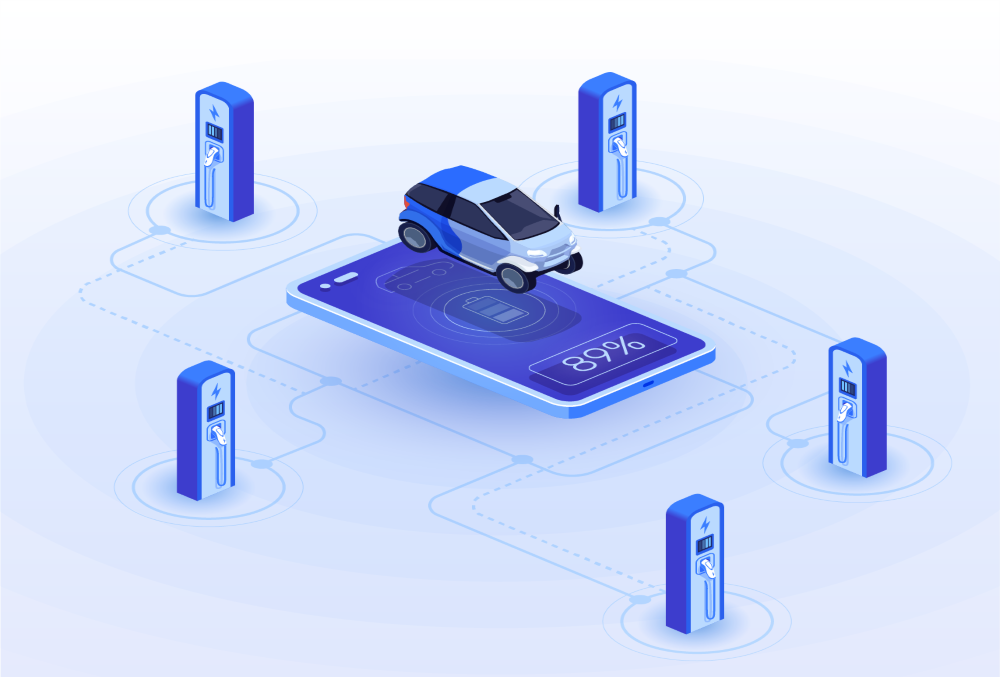
The simple answer to the question "what is EV charging?" is that it is the process of transferring electricity into the battery of an electric vehicle. But that definition no longer captures the reality of what EV charging has become.
Today, EV charging sits at the intersection of energy, mobility, payments, software and infrastructure. It is one of the fastest-growing sectors in transport, supporting millions of drivers while enabling entirely new business models for fleets, vehicle manufacturers, mobility platforms and charging operators. What was once a niche activity performed by early adopters in private garages is rapidly becoming a critical component of national infrastructure.
Understanding what EV charging is therefore requires looking beyond the charger itself. The charger is only the visible endpoint of a much larger ecosystem that determines how drivers access energy, how operators are paid, how networks communicate and how electric mobility scales across cities, countries and continents.
At NetworkCore, we work within that ecosystem every day. We see EV charging not simply as energy delivery, but as an interconnected infrastructure market where access, interoperability and settlement increasingly matter as much as the hardware itself.
From Home Charging to Public Infrastructure
In the early years of electric mobility, EV charging was largely a private activity. Most drivers who purchased electric vehicles installed chargers at home and charged overnight. The vehicle remained parked for hours, making charging speed less important than convenience. For many people, this remains the ideal scenario today.
Home charging continues to play a fundamental role in EV adoption because it integrates naturally into everyday life. Drivers return home, connect their vehicle and wake up to a full battery. The experience is predictable, familiar and often cost-effective.
However, as EV adoption expands, the market is increasingly serving drivers who do not have access to private parking, dedicated driveways or home charging infrastructure. Urbanisation alone guarantees that millions of current and future EV owners will depend on public charging for at least part of their energy needs.
This is where EV charging begins to evolve from a personal convenience into a public utility.
Public charging infrastructure allows drivers to charge while travelling, shopping, working or undertaking long-distance journeys. Motorway service stations, retail destinations, hotels, car parks and city streets are becoming part of the charging landscape. The growth of public charging has transformed EV ownership from something primarily suited to homeowners into something increasingly accessible to a much wider population. The dynamics of how parking and destination spaces fit into this layer are explored in EV Charging for Parking Operators.
The result is a market that no longer revolves around a single charging location. Drivers expect access wherever they happen to be.
Depot Charging and the Commercial Side of EV Charging
The same evolution is taking place in the commercial sector.
Many fleet operators invest in depot charging infrastructure where vehicles can charge overnight or between shifts. This model works particularly well for delivery companies, logistics providers and organisations operating predictable routes. By controlling their own charging environment, fleets can optimise operations and reduce dependence on external infrastructure.
Yet even the most extensive depot charging strategy has limits.
Vehicles travel beyond planned routes. Drivers encounter unexpected requirements. Operations expand into new territories. Long-distance journeys become necessary. At some point, virtually every fleet requires access to public charging infrastructure. This is precisely the gap addressed by public EV charging for fleets, and the broader fleet economics are covered in EV Charging for Fleets.
This reality highlights an important distinction that is often overlooked in industry discussions.
Most organisations do not need chargers everywhere.
They need charging everywhere.
The difference may appear subtle, but it changes how businesses think about electrification. Building infrastructure and accessing infrastructure are fundamentally different challenges. As EV adoption accelerates, access is increasingly becoming the more valuable capability.
Public and Private EV Charging Are Not Competitors
A common misconception is that public and private charging compete with one another. In reality, they are complementary parts of the same ecosystem.
Private charging offers convenience, control and predictability. Public charging provides flexibility, accessibility and scale. Neither can fully replace the other.
A driver may charge primarily at home while relying on public infrastructure during longer journeys. A fleet may operate depot chargers while using public charging to support operational flexibility. An OEM may never own charging infrastructure directly while still requiring comprehensive charging access for its drivers — a model set out in EV Charging for OEMs.
The future of EV charging depends on these different forms of infrastructure working together.
As the industry matures, the most successful participants will not necessarily be those who own the largest number of chargers. They will be those who can provide the simplest and broadest access to charging services.
This shift is already visible across the market.
EV Charging Is Becoming an Access Economy
One of the most important developments in electric mobility over the past few years has been the transition from infrastructure ownership towards infrastructure access.
In the early stages of the market, many businesses assumed they needed to build charging networks in order to participate in EV charging. Vehicle manufacturers explored proprietary solutions. Fleet operators considered extensive infrastructure deployment. Mobility platforms investigated direct charging investments.
The industry is gradually discovering that this approach does not always scale efficiently.
An OEM should focus on drivers.
A fleet should focus on operations.
A fintech platform should focus on customer engagement.
A mobility application should focus on user experience.
In most cases, these organisations do not need to become charging operators. They need reliable access to charging infrastructure and a trusted partner capable of connecting them to the broader ecosystem.
This is one of the reasons why concepts such as EV charging as a service, cross-network EV charging and EV roaming hubs have become increasingly important. The market is moving away from isolated networks and towards interconnected infrastructure capable of serving multiple participants simultaneously.
The Hidden Infrastructure Behind Every Charging Session
When most people think about EV charging, they picture a vehicle connected to a charging station. What they rarely see is the infrastructure operating behind the scenes.
Every public charging session involves far more than energy delivery. Drivers must be authenticated. Tariffs must be applied correctly. Session data must be validated. Revenue must be distributed. Payment flows must be settled. In many cases, multiple organisations participate in a single charging transaction.
This is why we often describe EV charging as a payments problem disguised as energy.
As public charging networks expand, the importance of interoperability increases. Drivers expect charging to work regardless of which operator owns the charger. Businesses expect charging services to function across networks and geographies. Fleets expect consistent access wherever their vehicles travel.
Meeting those expectations requires infrastructure capable of connecting supply and demand efficiently — a system explained in more depth in EV Charging Demand Platform and on the How It Works page.
The physical charger may deliver electricity, but the wider ecosystem delivers accessibility.
Where NetworkCore Fits Into EV Charging
NetworkCore operates at that infrastructure layer.
We are not a charger manufacturer and we do not operate public charging stations. Instead, we help connect the participants who make the EV charging ecosystem work. Our focus is on enabling access between Charge Point Operators and Distribution Partners such as fleets, OEMs, mobility platforms, rental companies, fintech applications and other organisations serving EV drivers.
The principle is simple.
Businesses should not need to build charging networks in order to offer charging services. They should be able to connect to infrastructure, provide charging access to their users and focus on the relationships they already own.
For Charge Point Operators, this creates additional demand and increased utilisation. For Distribution Partners, it creates access without infrastructure ownership. For drivers, it contributes to a more connected and accessible charging experience.
The long-term success of EV charging depends on making the ecosystem easier to access, not more fragmented.
The Future of EV Charging
The answer to the question "what is EV charging?" will continue to evolve over the coming decade.
At first, EV charging was primarily a hardware challenge. The industry needed chargers. Then it became a deployment challenge. The industry needed networks. Today, the challenge is increasingly about accessibility, interoperability and infrastructure connectivity.
Charging speeds continue to improve. Battery ranges continue to increase. More public and private charging stations are being deployed every year. These developments are important, but they are only part of the story.
The next phase of the market will be defined by how easily drivers can access charging wherever they travel and whichever application, vehicle or service they use.
That future depends on infrastructure that connects rather than isolates.
Conclusion
So, what is EV charging?
At its simplest, it is the process of delivering electricity to an electric vehicle. In reality, it is an increasingly sophisticated ecosystem that combines energy infrastructure, software, payments, interoperability and mobility services.
Home charging, depot charging and public charging all play essential roles. Private infrastructure provides convenience and control. Public infrastructure provides reach and flexibility. Together, they support the growth of electric mobility.
As the market matures, ownership is becoming less important than access. The organisations that succeed will not necessarily be those that build the most charging stations. They will be those that make charging available to the greatest number of users in the simplest possible way.
That is the direction of the industry.
And it is the infrastructure future that NetworkCore is helping to build.