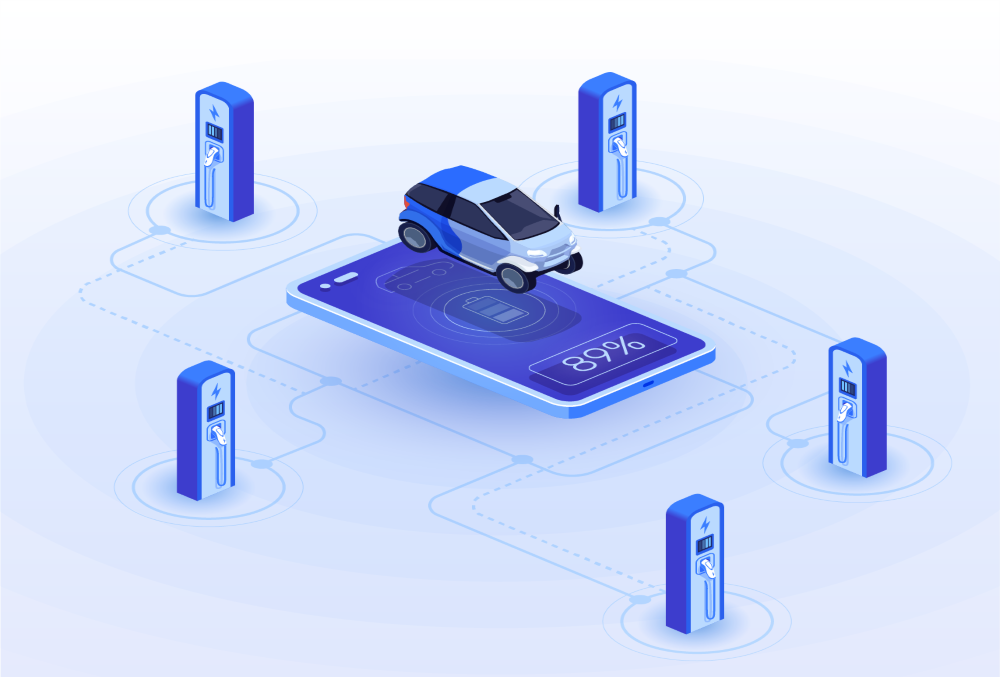
EV Charging for Hotels: The Amenity That Books Rooms and Earns Revenue at Once
EV charging for hotels is one of the most unusual and valuable amenities in hospitality, because it drives booking decisions from a high-value guest segment and fills the chargers you already own.
The conclusion first: EV charging for hotels is one of the most unusual and valuable amenities in hospitality, because it does two things no other amenity does simultaneously. It drives booking decisions from a high-value guest segment, and it fills the chargers on your forecourt. On Hilton.com, EV chargers have become the top booking filter, ahead of pools and free breakfast, which tells you the amenity is now a demand driver rather than a nicety. Yet most hotels treat EV charging for hotels as an infrastructure project to be endured rather than the passive, guest-facing revenue and service layer it can be. The difference is the platform beneath. Connected properly, charging integrates with the systems a hotel already runs, bills to the room like any other guest charge, and operates with no ongoing effort from the hotel. Service and revenue, fully passive. This post explains why hospitality is a uniquely strong fit, and how the model actually works.
Why hotels are a uniquely strong fit
Almost any business with EV-driving customers can offer charging, but EV charging for hotels is a structurally stronger fit than most, for reasons specific to how hotels operate.
The dwell time is perfect. A hotel guest is stationary for the entire night, which aligns exactly with Level 2 charging. Where a retailer offers a twenty-minute window and a motorway site offers a rushed stop, a hotel offers eight to twelve hours of guaranteed dwell, which is the ideal duration for cost-effective overnight charging. The guest plugs in at check-in and drives away in the morning fully charged, with no interruption to anything. Charging fits the hospitality rhythm more naturally than almost any other setting.
The guest is high value. The EV-driving traveller is typically higher-income, stays longer, and spends more on property amenities, and properties with EV chargers report meaningfully higher interest from this segment. This is not incremental footfall of uncertain value; it is a desirable, higher-spending guest that the amenity actively attracts. Research now treats charging as a measured driver of guest satisfaction, with J.D. Power incorporating EV charging into its hotel guest satisfaction study, and properties with charging consistently reporting higher revenue per available room, evidence that the amenity pulls in incremental, higher-spending guests rather than simply serving existing ones.
And the amenity is now a booking filter, not a bonus. In 2026, arriving guests with electric vehicles increasingly make booking decisions on a single question: does this property have a charger? When charging becomes the filter a guest sorts by, its absence removes the hotel from consideration entirely, and its presence puts the hotel in the shortlist. EV charging for hotels has crossed from amenity to acquisition channel. The broader travel and hospitality picture is set out on our travel and hospitality Distribution Partner page.
The amenity and the revenue are the same feature
The defining characteristic of EV charging for hotels, and the reason it deserves more strategic attention than a back-office infrastructure decision, is that the guest-service benefit and the revenue benefit are the same feature viewed two ways.
Consider what no other sustainability or comfort amenity does. A pool attracts guests but earns nothing directly. Free breakfast attracts guests but is a pure cost. Better linens, faster wifi, a nicer gym: all of them are amenities the hotel funds in the hope of winning bookings, and none of them has a direct revenue mechanism. EV charging for hotels is the exception. It attracts the booking and it earns revenue on every session, at once. It is simultaneously a marketing asset and an income line, which makes it unique among the things a hotel can offer.
This dual nature changes how a hotel should evaluate it. Charging is not a cost centre justified by soft guest-satisfaction benefits, and it is not a pure revenue play divorced from the guest experience. It is both, which means it clears a commercial bar that pure-cost amenities cannot. The hotel improves its booking appeal to a high-value segment and opens a revenue line, from a single investment, with the two benefits reinforcing each other. The general case for charging as a revenue layer is set out in EV Charging as a Revenue Stream.
Integrating with the PMS: charging on the folio
Here is the mechanic that makes EV charging for hotels genuinely native to hospitality rather than a bolted-on system, and it is the part hotels most often miss: charging should integrate with the property management system and appear on the guest folio like any other charge.
Every hotel runs a PMS, the system that manages reservations, the guest folio, and checkout billing. A guest's incidental charges, the minibar, the spa, room service, the parking, all flow onto the folio and settle at checkout as one bill. The natural home for EV charging for hotels is exactly there. When charging integrates with the PMS, a guest's overnight charging session simply appears on their folio alongside everything else, billed to the room, settled at checkout, with no separate payment, no separate app, and no separate account for the guest to create. The guest charges the way they use the minibar: effortlessly, with the cost appearing on their bill.
This is the integration that turns charging from a standalone system into a native hotel service. The guest experience becomes seamless, plug in at night, see it on the checkout bill, and the hotel captures the charging revenue through the billing system it already operates. For properties with a guest app, the same logic extends there: charging can live inside the app the hotel already offers, letting guests start, monitor, and pay for sessions in the same place they order room service or request housekeeping. Whether through the PMS folio or a guest app, the principle is that EV charging for hotels should live inside the systems the hotel and its guests already use, not alongside them. The technical detail of how charging connects into existing systems is covered in EV Charging API for Apps.
NetworkCore is built to sit beneath exactly this. The hotel connects once, and charging becomes available to be surfaced through the PMS or the guest app, with the payment capture, the pricing, the settlement, and the compliance all handled beneath the integration. The hotel presents charging as its own native service; NetworkCore does the financial work invisibly underneath.
Fully passive: the hotel operates nothing
The reason EV charging for hotels can be a service and a revenue line without becoming an operational burden is that, done through the right platform, it is fully passive. This matters enormously in hospitality, where staff are stretched and no property wants to run a charging business on the side.
After the chargers are connected, there is nothing for the hotel to operate. The hotel does not process charging payments; they flow through the PMS or the platform. The hotel does not handle settlement, reconciliation, or the multi-party financial flow; NetworkCore absorbs all of it. The hotel does not manage charging compliance, VAT treatment, or invoicing; these sit beneath the integration. The hotel does not run a charging support function. The charging simply works, the guest is billed, the revenue arrives, and the hotel's staff continue doing what they do, running the hotel.
This is the difference between EV charging for hotels as most properties fear it, a technical system demanding attention and expertise the hotel does not have, and as it should be, a passive amenity that earns and serves without ongoing effort. The hotel's only real responsibilities are the physical ones it already understands: maintaining the chargers and the parking. Everything financial and operational above the hardware is handled. The service is passive, the revenue is passive, and the guest experience is seamless. The broader model of charging as a zero-operations layer is set out in EV Charging White Label Solution.
The second revenue layer: filling chargers when the hotel is quiet
There is an additional opportunity within EV charging for hotels that strengthens the economics further, particularly for well-located properties.
A hotel's chargers are used by guests overnight, but during the day, when guests have checked out and driven off, those chargers often sit idle. If the hotel is in a location others pass, a city-centre property, a site near a road corridor, a destination near attractions, those idle daytime hours are stranded capacity. Through NetworkCore's distribution, a hotel can open its chargers to the wider network during the hours its guests are not using them, earning from drivers routed in from across the Distribution Partner network. The hotel's guests always come first; the network fills the empty hours.
This turns EV charging for hotels into a two-sided revenue asset. By night, it serves guests and earns from their sessions while driving the bookings that make the amenity worth having. By day, it earns from outside demand the network brings, monetising capacity that would otherwise sit idle. For a well-placed hotel, the same chargers work across the full day rather than only during guest hours, and the demand for the daytime half is delivered by the platform rather than something the hotel has to generate. How that outside demand reaches a host is set out in EV Charging Demand Platform.
The position for hotels
If you operate a hotel, EV charging for hotels is an unusually compelling proposition once you stop seeing it as an infrastructure headache and start seeing it as what it is: the one amenity that wins bookings from your highest-value guests and earns revenue at the same time, now the top booking filter on major platforms, delivered passively through the systems you already run.
Connect it properly and it integrates with your PMS, so charging appears on the guest folio and settles at checkout like the minibar. It runs fully passively, with the payments, settlement, and compliance all handled beneath the integration. It serves your guests seamlessly and earns you revenue on every session. And if your property is well located, the same chargers earn again from outside demand during the hours your guests are away.
Service and revenue, from a single amenity, operated by no one. Reach the team at NetworkCore to discuss what EV charging for hotels would look like for your property.